Campaigns are one of SAFOD's most powerful tools. They go beyond individual projects — building broad coalitions, shifting public and political narratives, and creating the conditions for systemic change. SAFOD currently runs two flagship campaigns: one focused on assistive technology access, and one focused on securing a binding regional disability framework at SADC level.
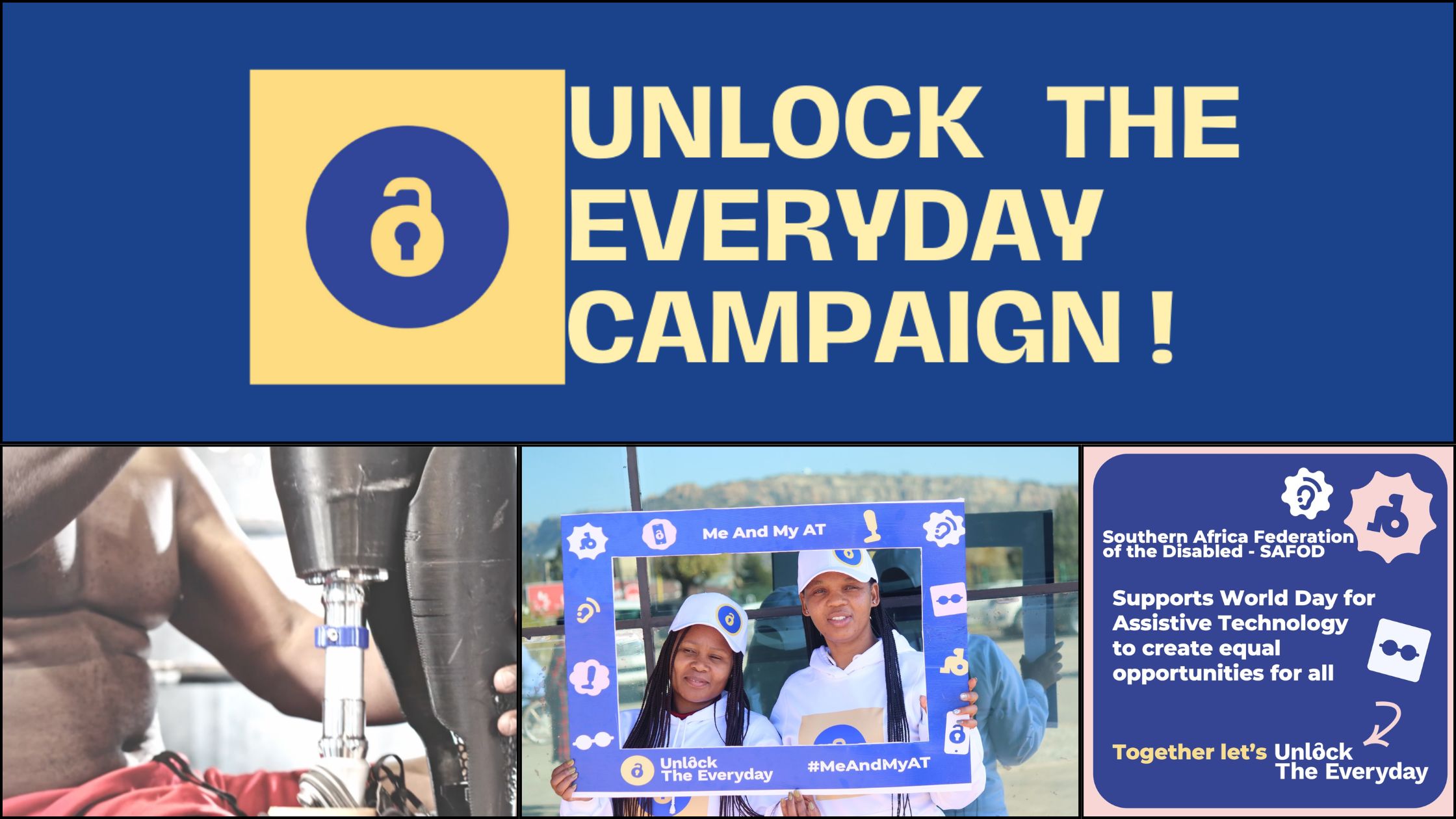
SAFOD coordinates the regional World Assistive Technology (AT) Awareness Campaign under the #UnlockTheEveryday brand, working in close partnership with 10 Organisations of Persons with Disabilities (OPDs) across eight Southern African countries. Funded by the AT Scale Global Partnership and implemented through UNOPS, the campaign is delivered each year around World AT Day.
SAFOD provides overall coordination and strategic guidance. OPDs lead on-the-ground activities in their countries. The campaign runs across three phases — pre-commemoration, commemoration, and post-commemoration — to sustain engagement beyond a single day event.
Persons with disabilities across Southern Africa face high levels of poverty, unemployment, and exclusion from education and community life. Assistive technology — wheelchairs, hearing aids, white canes, communication devices — is internationally recognised as a critical enabler of independence and participation.
Despite this, AT is not systematically integrated into national health systems. Most products are imported and unaffordable. Follow-up services — fitting, maintenance, replacement — are rarely publicly funded. Awareness among policymakers and communities remains critically low. The campaign directly targets these gaps.
- National policy dialogues — multi-stakeholder meetings in each country targeting senior government officials, policymakers, and development partners.
- AT Wellness Day (Botswana) — a hands-on event where OPDs, AT manufacturers, and service providers showcase products and practical solutions to at least 20 stakeholders.
- #UnlockTheEveryday social media campaign — coordinated across all 11 partners throughout the full campaign period, using a unified toolkit and real user stories.
- Regional AT webinar — "Innovate, Include, Impact": a cross-sector webinar covering education, local manufacturing, policy, climate resilience, and lived experience.
- Awareness walks, radio and TV interviews, panel discussions, podcasts, and community outreach — in-country activities led by national OPDs to build broad public awareness.
- Best practice flipbook — an accessible digital publication documenting country case studies, user stories, and replicable advocacy models from across the campaign.
- 🇧🇼 Botswana — Botswana Federation of the Disabled (BOFOD).
- 🇲🇼 Malawi — Federation of Disability Organisations in Malawi (FEDOMA).
- 🇿🇼 Zimbabwe — Federation of Organisations of Disabled People in Zimbabwe (FODPZ).
- 🇿🇲 Zambia — Zambia Federation of Disability Organisations (ZAFOD).
- 🇱🇸 Lesotho — LNFOD and Lesotho National League of the Visually Impaired (LNLVIP).
- 🇿🇦 South Africa — Disabled People South Africa (DPSA).
- 🇸🇿 Eswatini — Federation of the Disabled in Swaziland (FODSWA).
- 🇳🇦 Namibia — National Federation of People with Disabilities in Namibia (NFPDN).
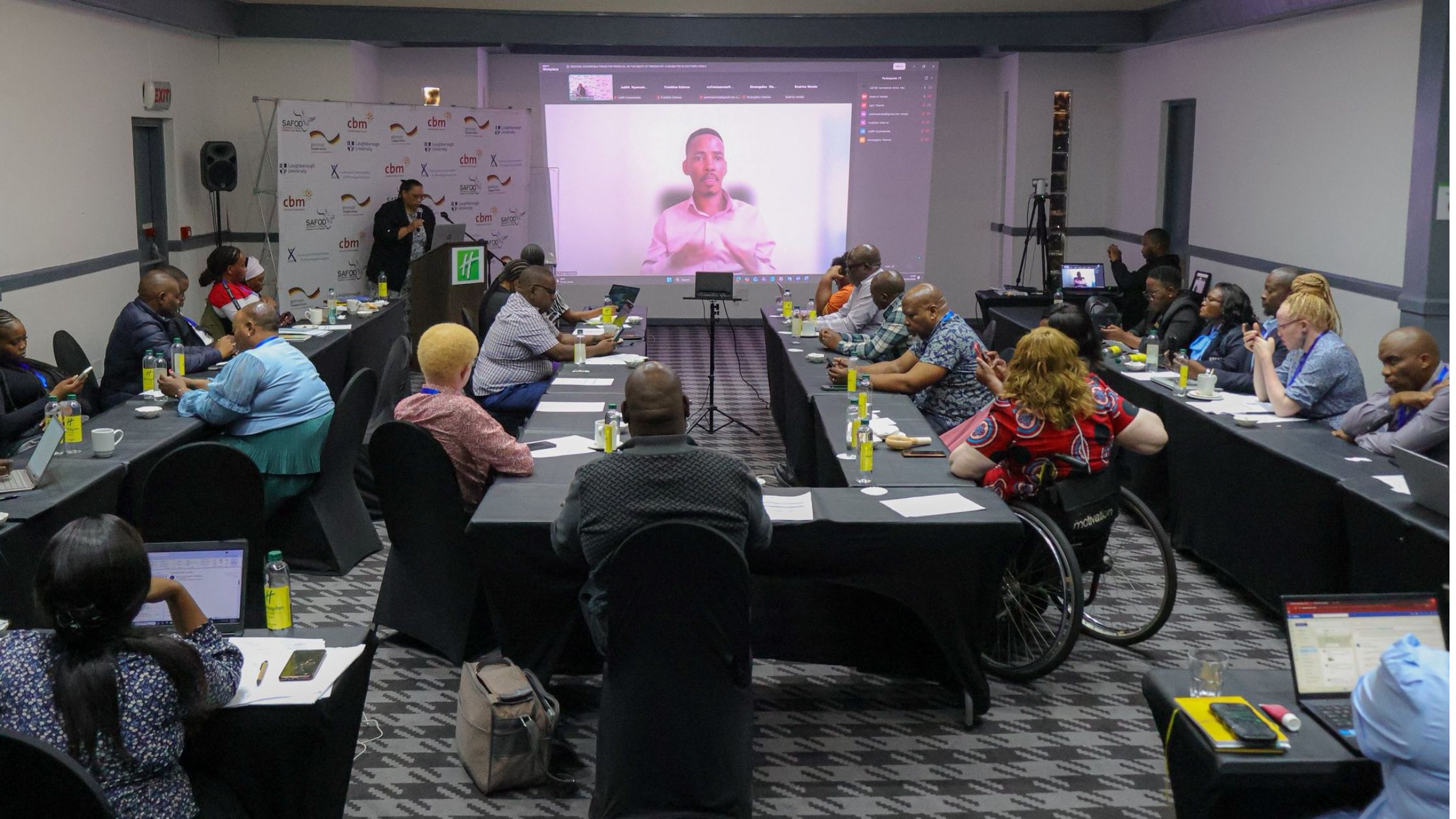
Since 2016, SAFOD has led a sustained campaign to secure the adoption of a SADC Disability Protocol — a binding policy instrument that would require all 16 SADC Member States to mainstream disability across regional development programmes, policies, and systems. The campaign also advocates for a dedicated Disability Desk Office at the SADC Secretariat, providing permanent institutional support for disability mainstreaming across the region.
The Protocol was developed through a rigorous, participatory process involving national OPD affiliates, governments, development partners, and persons with disabilities from across the region.
- Protocol development and refinement — a participatory drafting process engaging OPDs, governments, and disability rights experts across the region.
- High-level political engagement — direct engagement with SADC Chairpersons, Heads of State, and the SADC Secretariat.
- Regional Roundtable Forums — triennial events bringing together OPDs, governments, academic institutions, development partners, and civil society to evaluate progress and advance the Protocol.
- Public webinars and awareness raising — open events to build a broad constituency of support and ensure transparency in the Protocol process.
- Coalition building — partnerships with the African Disability Forum, Inclusion Africa, European Disability Forum, World Bank, GIZ, CBM, and national affiliates across all 16 SADC Member States.
- Three-year stakeholder influence plan — a structured road map guiding SAFOD's advocacy engagement towards formal Protocol adoption.
Most SADC countries have ratified the UN Convention on the Rights of Persons with Disabilities (CRPD). Yet disability is rarely reflected in regional frameworks on education, health, economic development, disaster risk reduction, or social protection. No dedicated structure exists at SADC to drive or monitor disability inclusion.
The Protocol would change this — providing a clear, enforceable framework binding all 16 Member States. A disability desk at the SADC Secretariat would give disability mainstreaming a permanent institutional home and ensure it is integrated across all SADC programmes and policies.