
About the SADC Disability Protocol campaign
SAFOD has led the campaign for the SADC Disability Protocol since 2016. The Protocol is a binding regional instrument. It would require all 16 SADC Member States to include persons with disabilities in regional development programmes, policies, and systems. It targets adoption at the Southern Africa Development Community (SADC) level.
The SADC Disability Protocol campaign also calls for a dedicated Disability Desk Office at the SADC Secretariat — a permanent institutional home for disability mainstreaming within the regional body.
Why the SADC Disability Protocol matters
Despite ratifying the UN Convention on the Rights of Persons with Disabilities (CRPD), most SADC countries have not translated their commitments into inclusive national policies or programmes. Disability is rarely reflected in regional frameworks on education, health, economic development, disaster risk reduction, or social protection.
No dedicated structure exists at SADC to drive or monitor disability inclusion. Without a protocol and a disability desk, persons with disabilities risk being excluded from the regional development agenda entirely. The SADC Disability Protocol would fill this gap — providing a clear, enforceable framework for all Member States.
Read more: why Southern Africa needs a disability protocol.
History of the SADC Disability Protocol campaign
This is a long-running advocacy effort built on years of research, consultation, and engagement with SADC leadership and member state governments.
2016Campaign launch and desk research
2017Zero draft of the SADC Disability Protocol
2021Audience with the SADC Chairperson
2022Public webinar and second Roundtable Forum
2023Seminar and stakeholder influence plan
OngoingOngoing work
What our SADC Disability Protocol campaign does
The campaign operates at multiple levels — from desk research and drafting to high-level political engagement and broad stakeholder mobilisation. Click each area to learn more.
SAFOD developed the SADC Disability Protocol through a rigorous, participatory process. It began with desk research in 2016 reviewing how inclusive existing SADC policies and frameworks were. A zero-draft was then introduced and refined through multiple rounds of consultation with national affiliates, governments, development partners, and persons with disabilities across the region. The Protocol has been revised to incorporate diverse perspectives and ensure it reflects the lived realities of persons with disabilities across all 16 SADC Member States.
SAFOD has engaged directly with SADC leadership, including a formal audience with the SADC Chairperson in 2021. These engagements have secured public commitments of support from senior officials and positioned the Protocol as a legitimate and necessary regional policy instrument. Ongoing advocacy targets SADC Heads of State, the SADC Secretariat, and national governments, with a focus on building the political will needed for formal adoption.
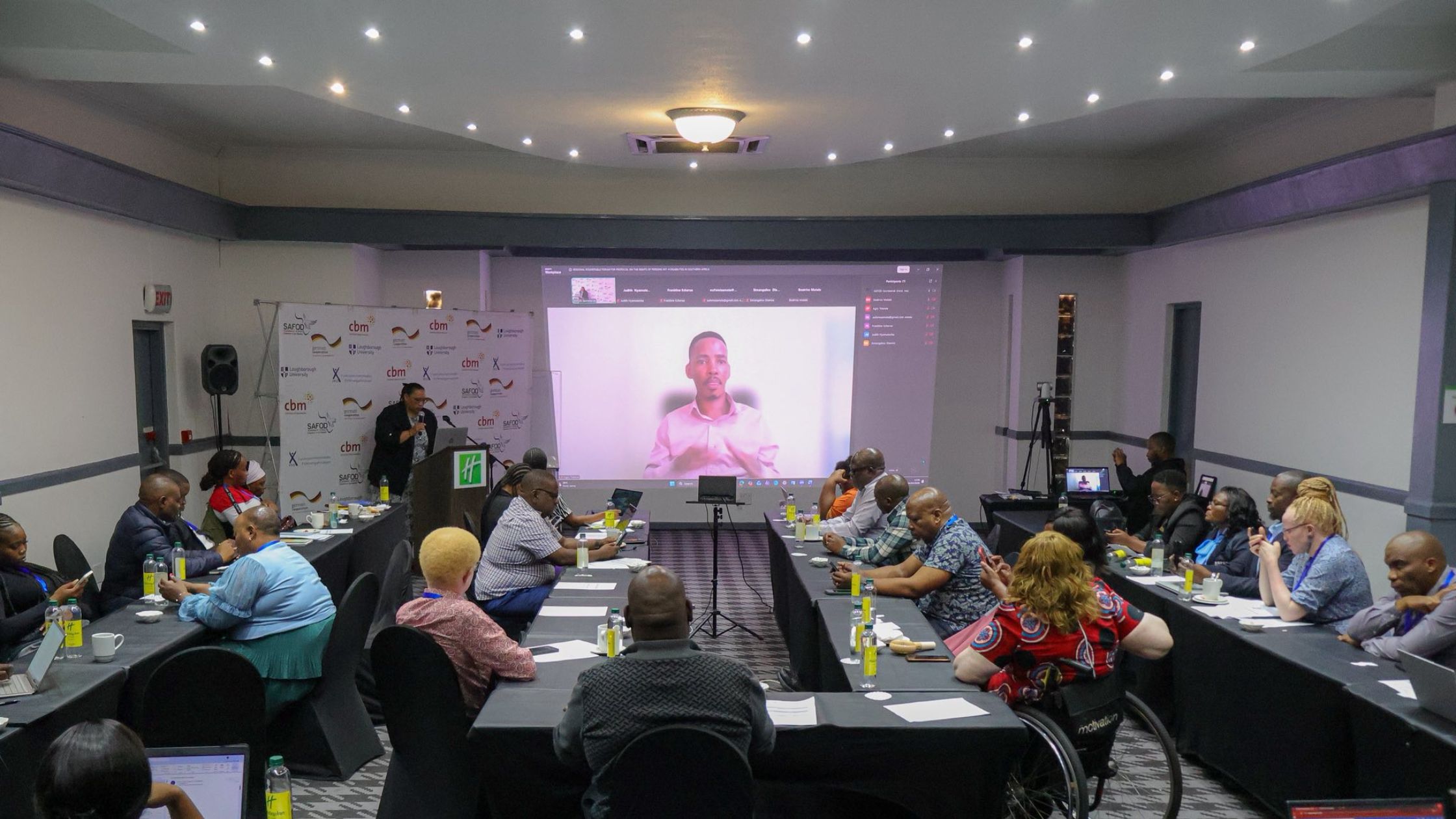
SAFOD holds a Southern Africa Disability Roundtable Forum every three years to evaluate the state of disability rights in the region, share information and experiences, and advance key advocacy priorities. The Forum brings together OPDs, governments, development partners, academic institutions, and corporate actors. The 2022 Forum in Johannesburg, held under the theme "Leaving No One Behind," included over 100 participants from across the region and placed the SADC Disability Protocol and disability desk at the centre of the regional agenda.
SAFOD has hosted public webinars to raise awareness of the Protocol campaign and solicit broader inputs into the draft. The July 2022 webinar attracted 86 participants from across the region. These events serve to build a wider constituency of support, ensure transparency in the drafting process, and strengthen the legitimacy of the Protocol as a document that reflects the voices of persons with disabilities across Southern Africa.
SAFOD has built a broad coalition of organisations supporting the campaign. Key partners engaged include:
- National OPD federations across all 16 SADC Member States.
- The African Disability Forum and Inclusion Africa.
- The European Disability Forum (EDF).
- The World Bank, GIZ, and CBM.
- Government bodies including national disability departments and SADC DRR.
- Academic and research institutions.
A three-year stakeholder influence plan, developed from the 2023 Protocol seminar, provides a structured road map for deepening these relationships and converting support into formal adoption.
Key milestones of the SADC Disability Protocol campaign
Looking ahead: adopting the SADC Disability Protocol
The next major milestone is the regional Roundtable Forum, currently in preparation, at which SAFOD aims to secure formal agreement on the SADC Disability Protocol and advance the case for a SADC Disability Desk Office. The three-year stakeholder influence plan is now guiding SAFOD's engagement with SADC leadership and national governments across the region.
Parallel workstreams — including partnerships with the European Disability Forum and ongoing engagement with SADC's social sector — continue to build the broader enabling environment for adoption. The goal remains unchanged: a binding regional framework that ensures no person with a disability is left behind in Southern Africa's development agenda.