
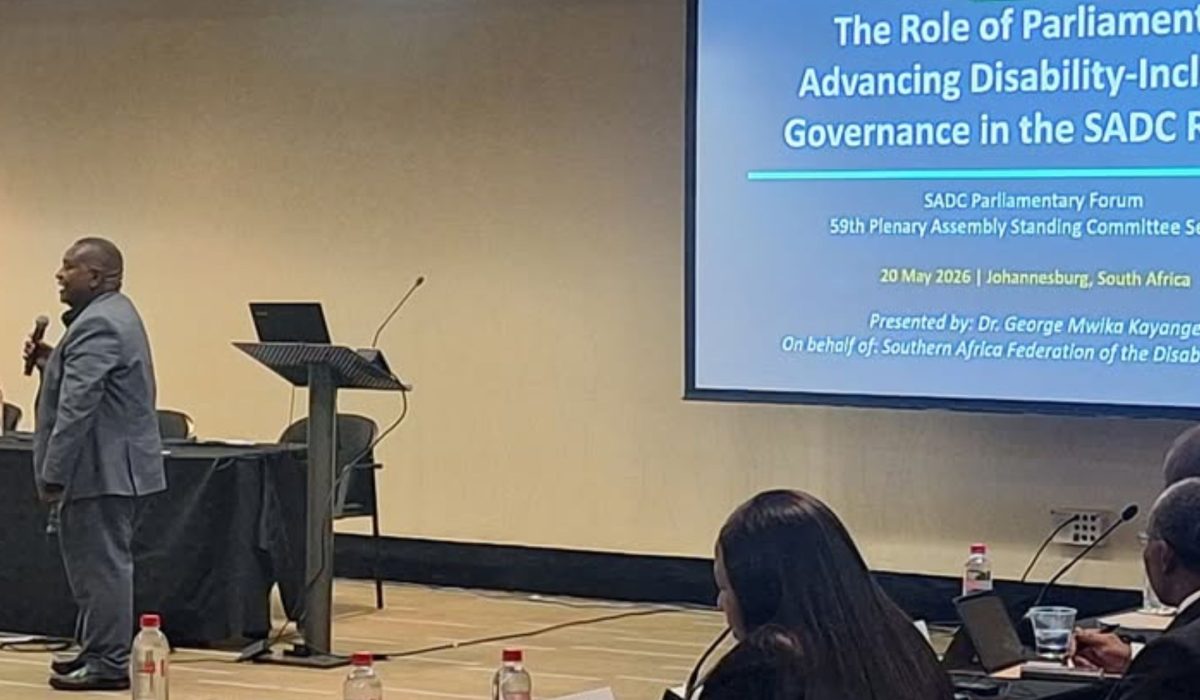
On 20 May 2026, Dr George Mwika Kayange spoke to parliamentarians from across Southern Africa about disability-inclusive governance. The event was the 59th Plenary Assembly Standing Committee Session of the SADC Parliamentary Forum. It took place at the Southern Sun OR Tambo Hotel in Johannesburg, South Africa.
He spoke on behalf of the Southern Africa Federation of the Disabled (SAFOD). SAFOD is the regional network of organisations of persons with disabilities in all 16 SADC Member States.
Why Disability-Inclusive Governance Matters
Over 84 million persons with disabilities live in Africa. That is about 15 percent of the continent’s people. In Southern Africa, they face exclusion from school, work, health care and civic life.
According to Dr. Kayange, who is also the founder of the Assistive Technology Innovation Wiki and the Child Rights Information and Documentation Centre (CRIDOC), this is not a welfare problem. It is a disability-inclusive governance failure.
The legal tools exist. The UN Convention on the Rights of Persons with Disabilities (UNCRPD) has been in force since 2008. The African Union adopted its Disability Protocol in 2018, and it came into force in June 2024. Every SADC Member State except Botswana has ratified the UNCRPD.
Yet action on the ground is weak and uneven. Parliaments can close that gap.
The Gap in SADC’s Disability Framework
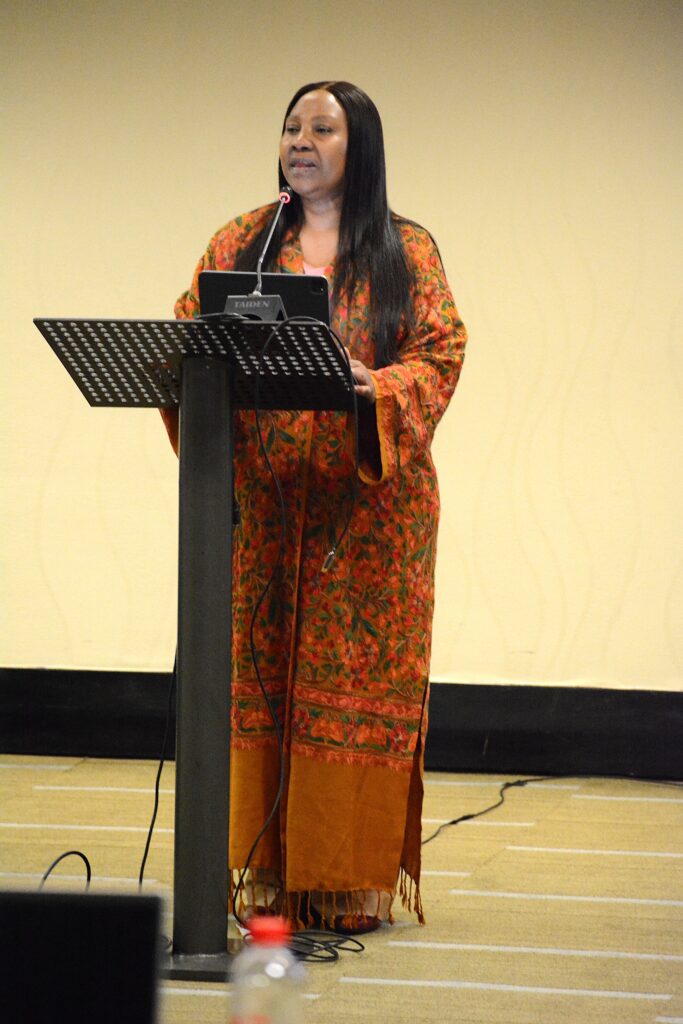
SADC has no regional disability protocol. Disability sits under broader social development work. It is not a priority in its own right.
This has real costs. There are no shared standards for inclusion. There is no strong way to hold governments to account. Member States report progress, or fail to, with no binding framework to measure against.
SAFOD began desk research on this in 2016. It checked how inclusive existing SADC protocols were for persons with disabilities. The answer was: not very.
What SAFOD Has Done to Advance Disability-Inclusive Governance
In 2020, SAFOD finished the Draft SADC Disability Protocol. Governments, civil society and organisations of persons with disabilities across the region shaped it through wide consultation.
Since then, SAFOD has met government officials in Malawi, Namibia, Botswana, Lesotho, South Africa, Zimbabwe and Zambia. The response has been encouraging.
In 2021, SAFOD met the then SADC Chairperson, Dr Lazarus Chakwera, President of Malawi. He backed the protocol. He also committed to support a disability desk at the SADC Secretariat.
A regional protocol seminar in 2023 produced a three-year advocacy roadmap. It sets out steps to build political will across the region. Read more in why Southern Africa needs a disability protocol.
Three Ways Parliament Drives Disability-Inclusive Governance
Parliaments hold three roles that matter most.
1. Turn Commitments into National Law
Ratifying the UNCRPD or the AU Protocol means little without national law. Parliaments should check existing laws and repeal unfair provisions. They should pass disability-inclusive laws and set national action plans with clear timelines. Disability must run through every sector policy, not sit on the side.
2. Oversight: Hold Governments to Account
Laws without follow-up are just words. Committees must check that governments keep their promises. That means asking for regular progress reports and tracking disability budgets. It also means calling agencies to account when they fall short. Close links with national disability organisations keep that pressure rooted in real lives.
3. Build Disability-Inclusive Governance Through Participation
“Nothing About Us Without Us” is not a slogan. It is a standard. Parliaments need formal ways for persons with disabilities to take part in making laws. Buildings and information must be accessible. Organisations of persons with disabilities should be real partners, not token guests.
The Twin-Track Approach to Disability-Inclusive Governance
Mainstreaming disability across all sectors is vital. It is not enough alone.
Some persons with disabilities face barriers that mainstreaming will not reach. They also need targeted support, such as disability-specific services and reasonable accommodation.
Both tracks are needed. Together, they deliver full inclusion and equal participation.
Proof That Parliamentary Action Works
The region already offers good examples.
- South Africa has disability laws and active oversight committees that drive accountability.
- Kenya’s parliamentary advocacy led to the Persons with Disabilities Act of 2025, with real enforcement tools.
- Namibia has a Disability Council chaired by the Prime Minister, which gives top-level ownership.
- Zambia’s recent CRPD Committee review produced firm national action commitments.
None of this work is finished. It shows what is possible when parliaments lead.
Why Now Is the Time for a SADC Disability Protocol
The SADC Parliamentary Forum brings lawmakers together. It creates space to share lessons and push regional commitments into national law. SAFOD asks members to use that platform for disability rights.
The Draft SADC Disability Protocol fills a clear gap. It would set shared standards and build accountability. It would place disability rights inside the SADC integration agenda. It would also add to the UNCRPD and the AU Protocol with a text made for Southern Africa.
Political will is growing. Governments are listening. The next step is steady, joint pressure from parliaments to move the protocol from draft to adoption.
Five Steps to Advance Disability-Inclusive Governance
Parliamentarians can start here:
- Audit national laws for disability gaps.
- Set up or strengthen parliamentary committees with a disability mandate.
- Work directly with national disability organisations and federations.
- Press the SADC Parliamentary Forum to adopt the Draft SADC Disability Protocol.
- Build disability views into budgets and development plans.
Final Thought: Rights Advance When People Push
Disability rights do not advance on their own. People fight for them through advocacy, community action and hard pressure on institutions.
SAFOD has done this work in Southern Africa for nearly four decades. The SADC Parliamentary Forum gives a strong platform to speed up progress.
Persons with disabilities are not asking for charity. They are claiming their rights. Parliaments have the power, and the duty, to answer.
Dr George Mwika Kayange presented at the 59th Plenary Assembly Standing Committee Session of the SADC Parliamentary Forum on 20 May 2026 in Johannesburg, South Africa, on behalf of the Southern Africa Federation of the Disabled (SAFOD). SAFOD is the leading regional disability-focused network operating across all 16 SADC Member States. Learn more at safod.net.