
Strengthening human rights and good governance across SAFOD affiliates
A three-year project to build the skills of affiliate DPOs in leadership, advocacy and monitoring of the UN Convention on the Rights of Persons with Disabilities.
Overview of the human rights and good governance project
This human rights and good governance project helped SAFOD affiliates run stronger, more accountable organisations. On 16 June 2016, SAFOD Director General Mr Mussa Chiwaula and FFO Secretary General Ms Lilly Ann Elvestad signed the agreement in Oslo, Norway. It set out a project to build affiliate skills in running accountable organisations and in promoting the interests of persons with disabilities.
The project formed part of FFO's Theory of Change. This aimed to support organisational growth and training that empowered partner organisations. Through partners like SAFOD, FFO sought to change attitudes towards persons with disabilities in society and in government. The goal was better living conditions for persons with disabilities.
Background
FFO believed that the lives of women and men with disabilities improve when they know their entitlements and share a vision for change. They need support to organise, mobilise and act together at local, national, regional and international levels.
To do this, they need solid knowledge of the law and clear evidence of their real situation. They also need effective ways to put their case to decision-makers. This pressure helps make policies and practices disability-inclusive. It also drives action to reduce discrimination and exclusion.
One key area of the three-year agreement was building affiliate skills in monitoring the UN Convention on the Rights of Persons with Disabilities (UNCRPD). This included writing periodic shadow reports. FFO and SAFOD agreed that active DPO participation is a vital way to follow the work of the CRPD Committee. DPOs can take part at many stages: the State Party report, reports from national monitoring frameworks, and parallel reports by national DPO coalitions. SAFOD's role was to build DPO skills so they could stay visible and active at every stage.
What the human rights and good governance project does
The project combined training, advocacy and hands-on support for monitoring and reporting. Select each area to read more.
Affiliate federations took part in leadership and accountability training. This helped them run as strong, accountable organisations able to lead disability advocacy in their countries.
SAFOD ran targeted CRPD advocacy and communication training for its affiliates. It built the skills DPOs need to make their case and engage decision-makers with confidence.
The project included training of trainers within affiliates. This kept skills inside each organisation, so they could pass on knowledge and keep the work going beyond the project.
SAFOD carried out advocacy with SADC and the African Development Bank on targeted disability issues. Affiliates also did national advocacy with their own governments on the same issues.
The project supported affiliates to join the annual SADC CSO Forum. This gave disability a stronger voice in regional civil society spaces.
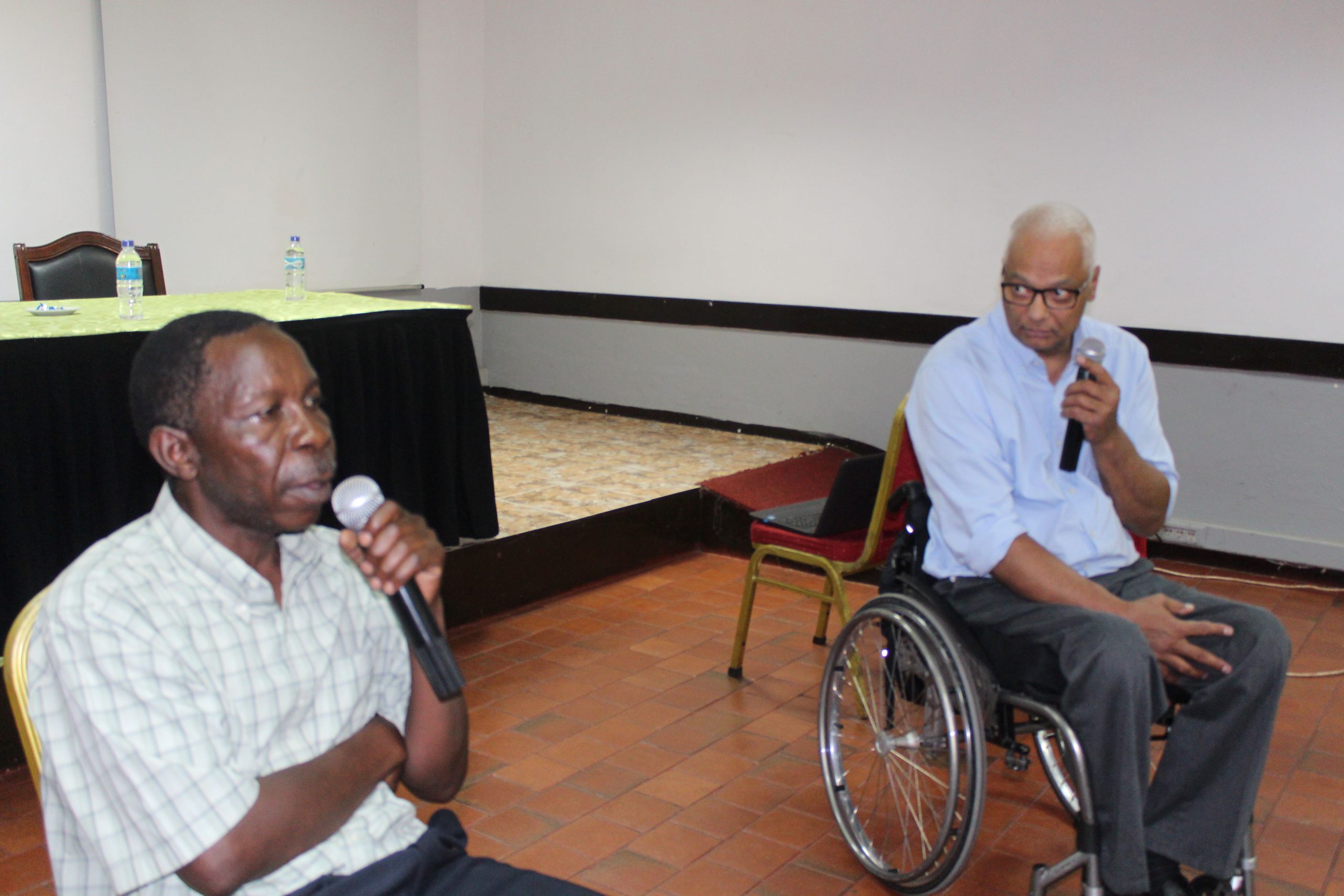
In October 2017, eight affiliate federations met in Johannesburg for regional training on UNCRPD monitoring and reporting. Each affiliate agreed to prepare a national plan of action for monitoring and shadow reporting. Read the full story in the spotlight section below.
After Johannesburg, SAFOD engaged Mr Shuaib Chalklen to lead shadow reporting workshops for OPDs in Namibia, Mozambique and Malawi. National monitoring mechanisms were set up or strengthened in these countries. Details follow below.
Spotlight: UNCRPD monitoring training in Johannesburg
A central part of this project was the regional UNCRPD monitoring and reporting training. SAFOD held it in Johannesburg, South Africa, on 16 and 17 October 2017, with funding from FFO. SAFOD's then Director of Programmes, George Mwika Kayange, facilitated the event. Director General Mr Mussa Chiwaula officially opened it.
The training gave affiliates the skills for parallel reporting and general monitoring of UNCRPD implementation. The sessions used presentations, group work and plenary discussions, so participants could share experiences from their own countries.
Each affiliate gave a short talk on the state of the Convention in their country. The facilitator then led sessions on the reporting mechanism, the CRPD Committee, the reporting cycle, and the difference between State Party reports and parallel reports. Participants also looked at Article 33 and the role of national monitoring mechanisms.
In group work, the affiliates drafted model plans of action for monitoring and reporting. They agreed to take these plans home and submit their own national versions to SAFOD. They also agreed to first check whether a national monitoring mechanism existed in their country, then help set one up or strengthen it.
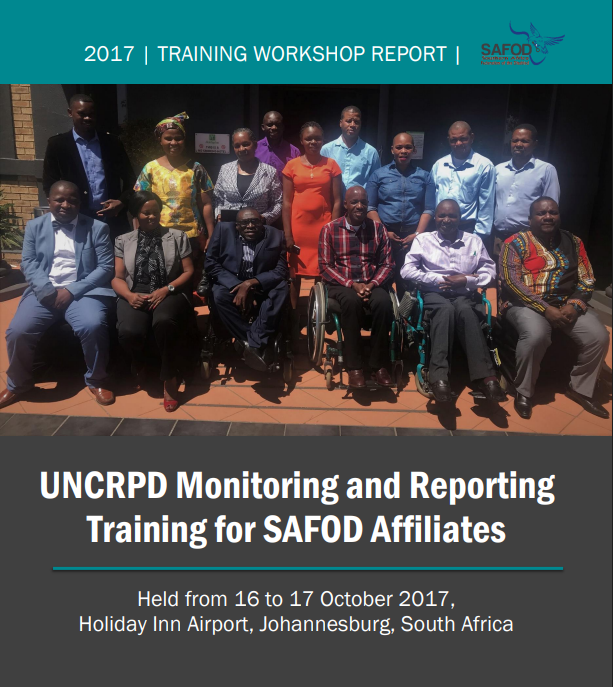
SAFOD UNCRPD Monitoring and Reporting Training Report 2017
The full report covers the workshop aim, methods, country talks, sessions, group work, resolutions and evaluation.
Download report (PDF)National monitoring workshops in three countries
The Johannesburg training led to a series of national workshops. SAFOD engaged Mr Shuaib Chalklen to facilitate them. He is a prominent South African disability activist and policy expert. He served as the UN Special Rapporteur on Disability for the Commission for Social Development from 2009 to 2014.
Mr Chalklen led shadow reporting workshops for OPDs in Namibia, Malawi and Mozambique. In each country, the national monitoring mechanism was set up or strengthened. The workshops brought together affiliate DPOs, government representatives, oversight bodies and other stakeholders.
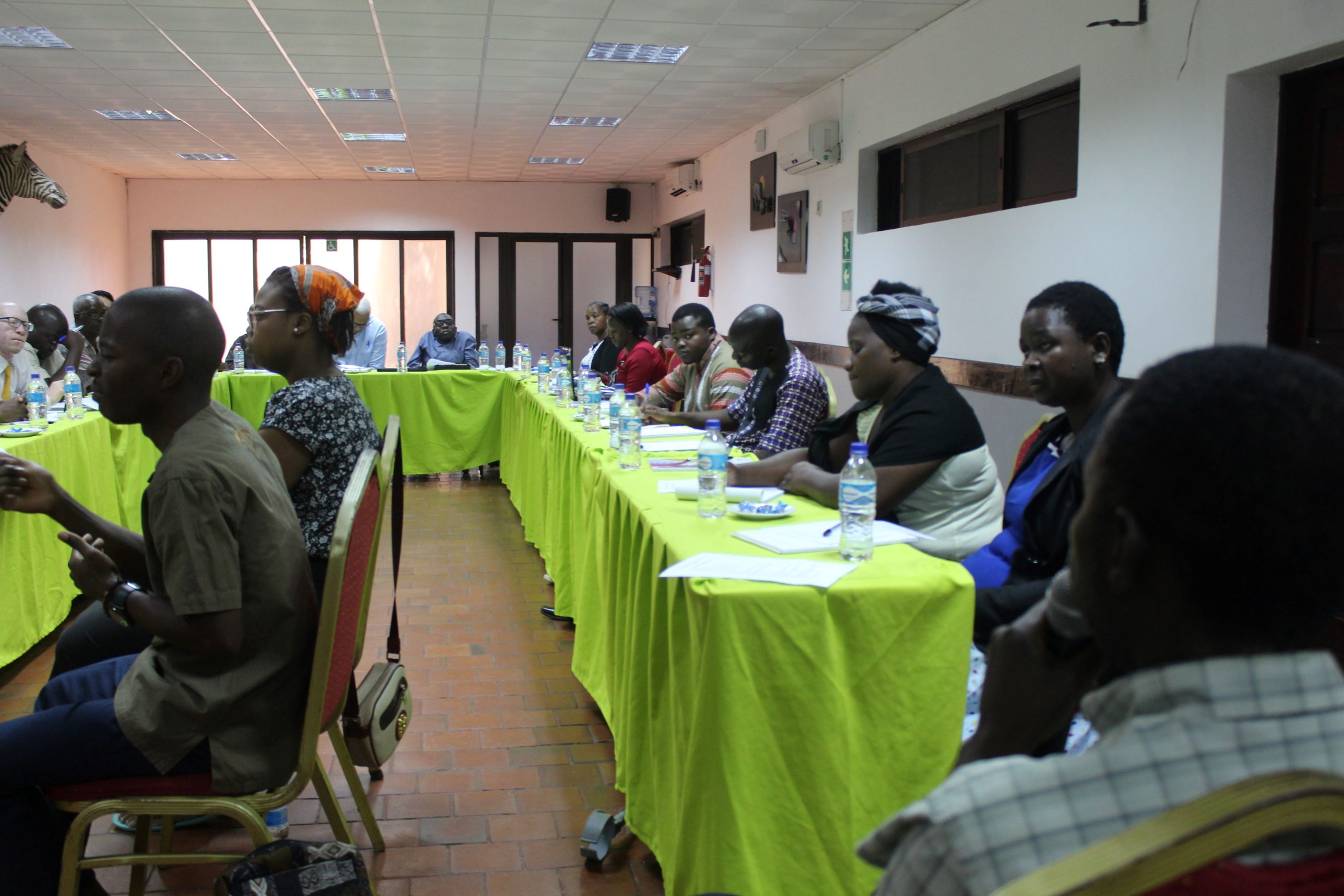
Mozambique
The workshop helped local OPDs understand their role in monitoring the Convention. It set out how they could take part at each stage of the reporting process.
Namibia
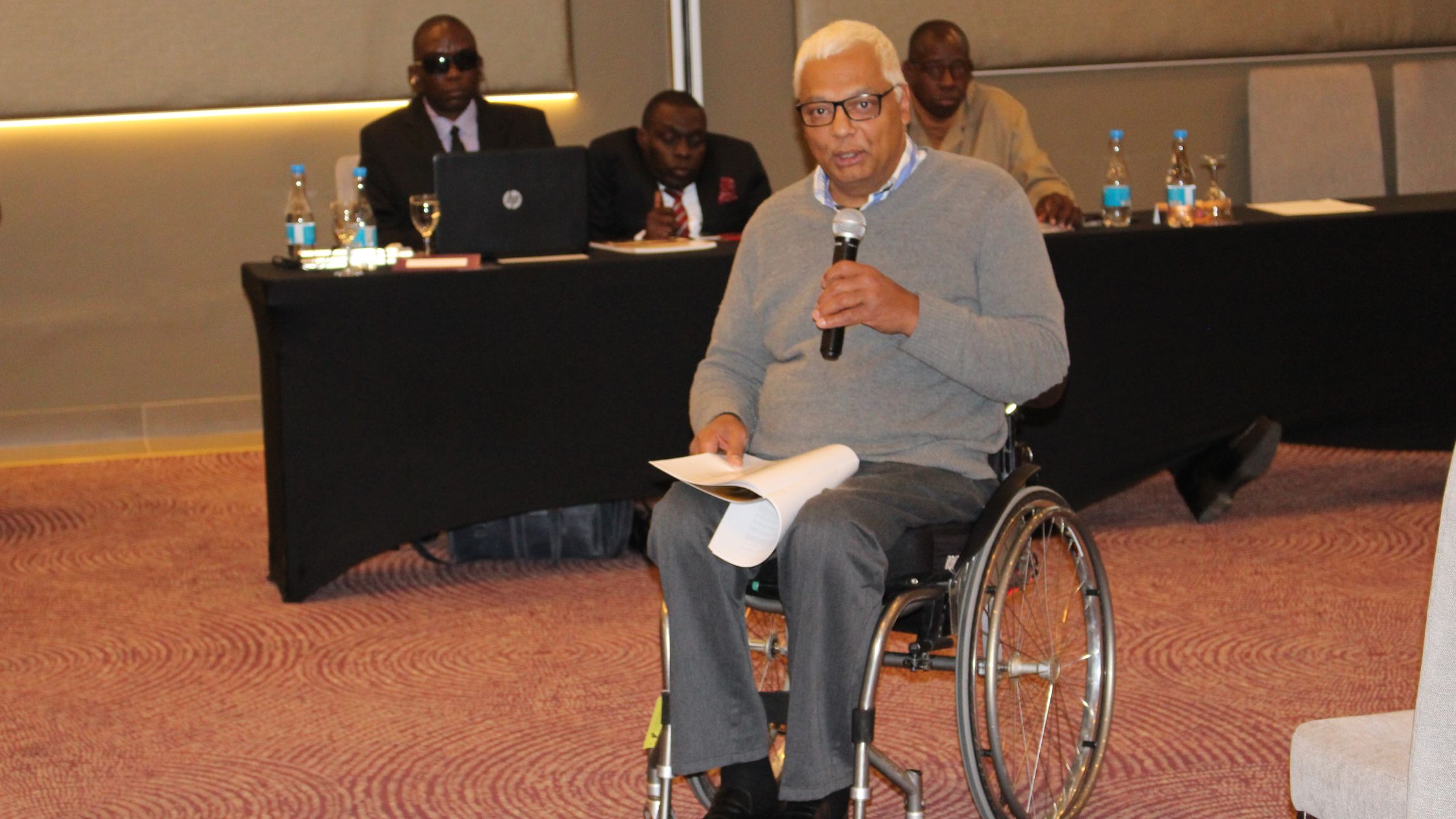
The workshop was held in Windhoek. It focused on the terms of reference for the national monitoring mechanism and the roles of duty bearers and those they serve. Participants agreed on steps to strengthen monitoring and to keep regular consultation between the different role players.
Malawi
The workshop was held in Lilongwe. It worked through the terms of reference for the national mechanism, the roles of each player, and a plan of action for monitoring and reporting. Across all three countries, the aim was the same: to leave behind a working national mechanism that DPOs can take part in.
Key results
Looking ahead
The project gave SAFOD affiliates the skills and tools to monitor and report on the UNCRPD in their countries. It also built stronger, better-run organisations able to lead disability advocacy.
SAFOD continues to work with affiliates to support shadow reporting and to engage national monitoring mechanisms. The aim is for DPOs to stay visible and active at every stage of the reporting process, and to hold governments to account. You can donate, explore a partnership or contact us.