
Youth with disabilities: the SA-CYD programme
Young people with disabilities are rights-holders, advocates and agents of change. SA-CYD gives them the skills and platforms to prove it.
Youth with disabilities are among the most excluded people in Southern Africa. They are kept out of schools, left out of health services, and rarely asked about decisions that affect their lives. In policy spaces, where those decisions get made, their voices are almost never heard.
SA-CYD is one of our programmes. It works with our national affiliates across the SADC region.
Flagship initiative for youth with disabilities
#InclusiveYoungVoices (#IYV)
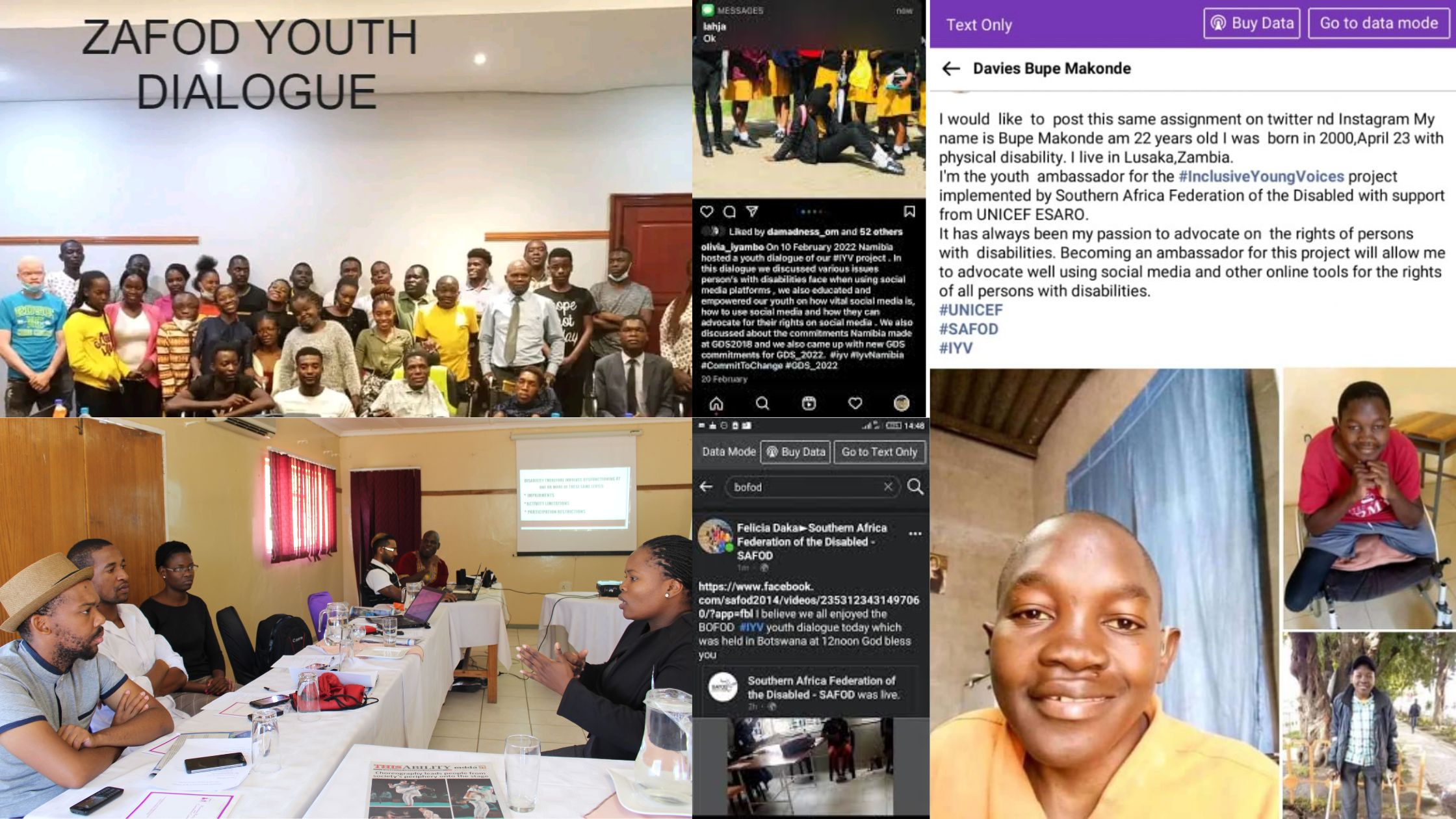
UNICEF funds this project, which we run with national affiliates in five countries. It targets children and youth with disabilities aged 15 to 24. It gives them the skills and platforms to speak for themselves, including on social media, where much advocacy happens today.
Visit the Inclusive Young Voices website or read about the project.
- Botswana
- Namibia
- Mozambique
- Zambia
- Malawi
Key activities
- Online training of 20 Youth Ambassadors, four per country, in social media skills and disability rights advocacy.
- Youth dialogues in all five pilot countries. Children and young people with disabilities named key issues and wrote Calls to Action for governments and duty bearers.
- Engagement meetings with members of parliament, ministers and local councillors. They gave young people direct access to those with power to act.
- A survey on how children with disabilities use social media for advocacy. It produced evidence to guide training and support.
- Development of SAFOD's child safeguarding policy. It ensures our work with young people meets clear standards of protection and accountability.
Our model for empowering youth with disabilities
- 1Build skills.
- 2Provide a platform.
- 3Connect with decision-makers.
- 4Scale across all 16 SADC states.
Holding governments to account
Related work
The disability rights movement cannot last without the next generation. When young people with disabilities speak for themselves, to ministers, on social media and in policy forums, they change what is possible.