
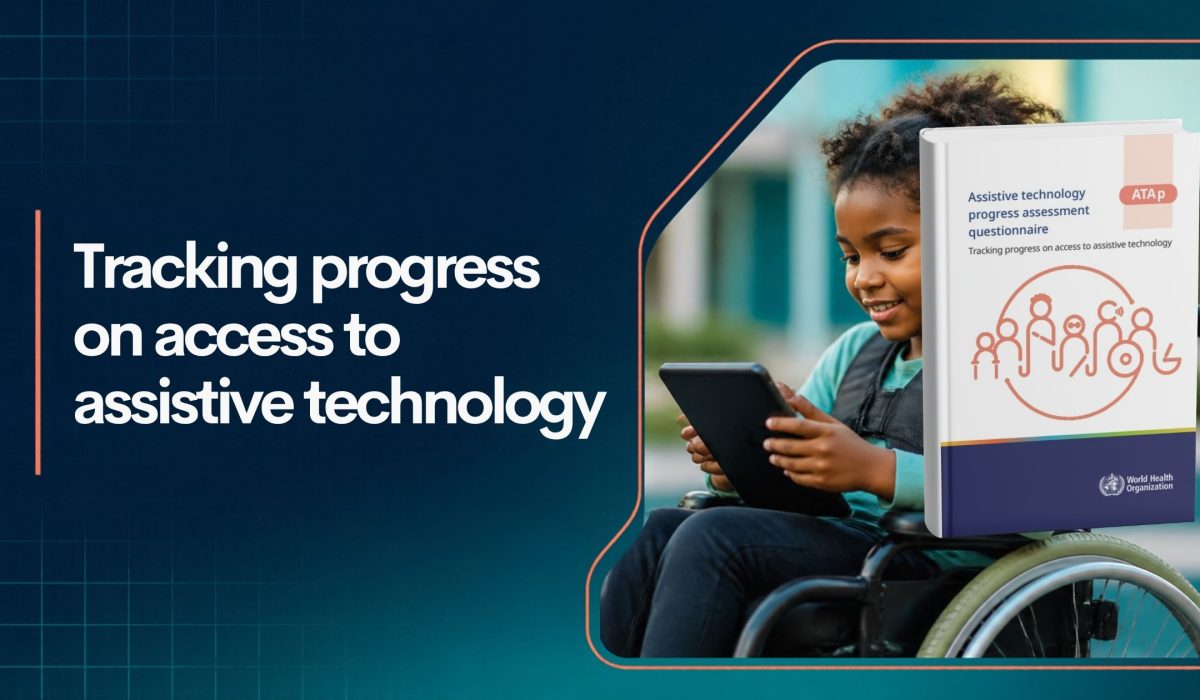
Governments have promised better access to assistive devices since 2018. Few can show whether they kept that promise. On 5 October 2026, the World Health Organization (WHO) released the assistive technology progress assessment questionnaire to close that gap. It gives countries ten indicators to track their progress.
For the Southern Africa Federation of the Disabled (SAFOD), this matters. People with disabilities in the region still wait for wheelchairs, hearing aids, and glasses. Good data shows who is missing out. This article explains what the questionnaire is and why it matters. It also links the tool to the new UN resolution, the #UnlockTheEveryday campaign, the AT-Info-Map and SAFOD’s webinars.
What Is the Assistive Technology Progress Assessment Questionnaire?
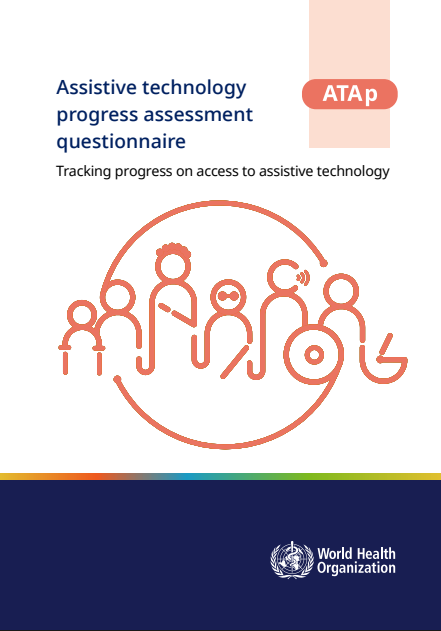
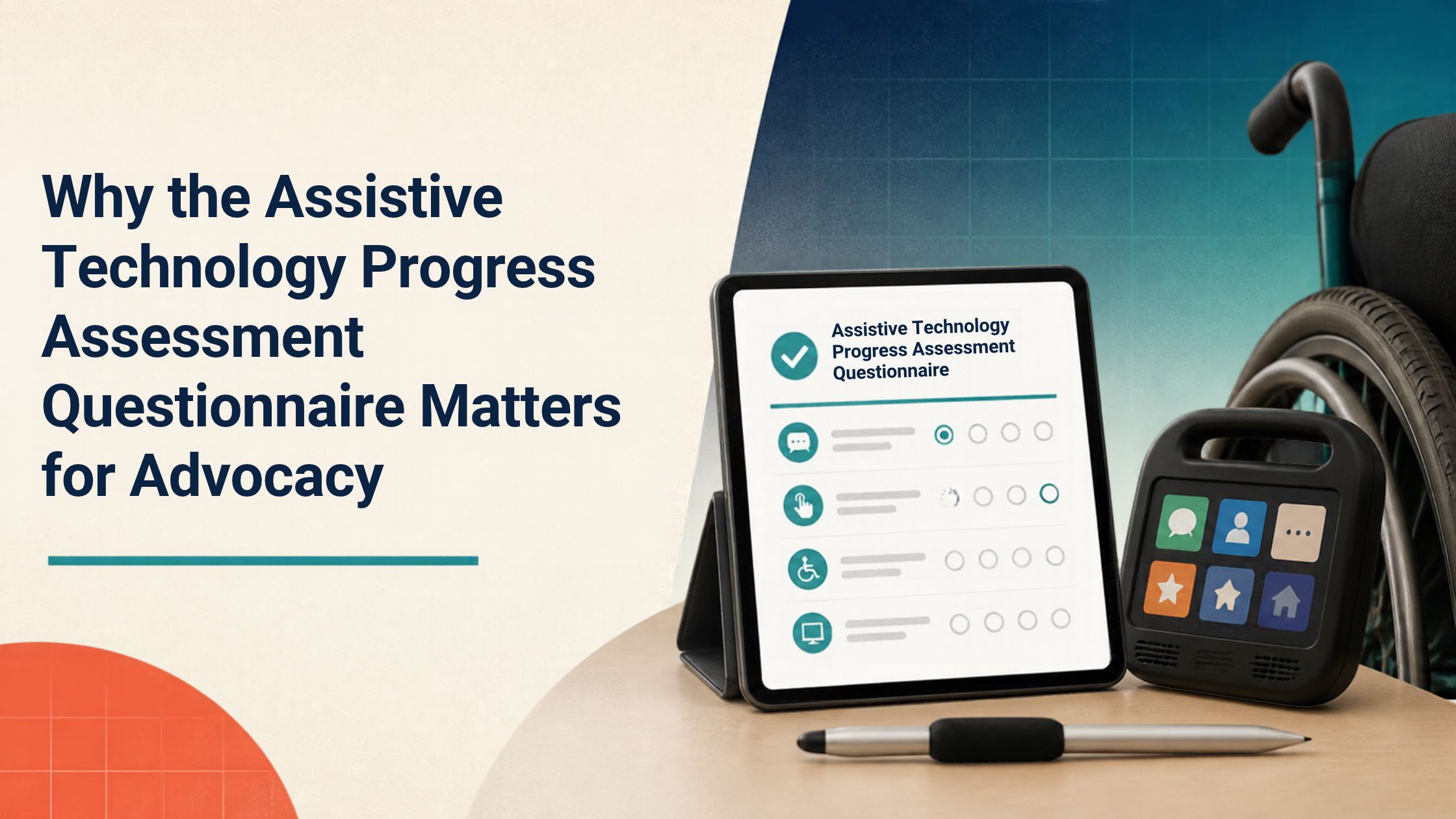
WHO describes the publication as a short set of ten progress indicators. It runs to 33 pages. Governments and partners use it to check how far a country has come on access to assistive technology.
The questionnaire follows World Health Assembly resolution WHA71.8, adopted in May 2018. That resolution asks countries to act on:
- Policies and programmes.
- Staff and skills.
- National lists of priority assistive products.
- Research and innovation.
- Regional and global teamwork.
- Data collection.
- Barrier-free spaces.
The questionnaire turns these asks into a standard check. WHO’s assistive technology toolkit says the indicators measure how ready a country’s system is. They cover governance, law, public budget, financing, rules and standards, partnerships, service coverage, staff and training.
WHO ran a first round of this survey in 2021. Seventy countries took part. Their answers fed the 2022 Global Report on Assistive Technology. You can download the new publication from WHO. It carries a Creative Commons licence for non-commercial use.
How the assistive technology progress assessment questionnaire works
The tool is a government survey. Each indicator shows where a country’s system is strong and where it falls short. WHO says the aim is to help countries watch their progress, find gaps, and choose where to act first. The toolkit page says the indicators track progress up to 2030.
Why the Assistive Technology Progress Assessment Questionnaire Matters for Advocacy
The need for access to assistive technology is huge. The Global Report found that more than 2.5 billion people need at least one assistive product. That number may pass 3.5 billion by 2050. Nearly one billion people are denied access. In some low- and middle-income countries, access can be as low as 3 per cent of need.
The wider picture is just as stark. WHO estimates that 1.3 billion people live with a significant disability. That is one in six people. WHO’s regional framework says only 15 to 25 per cent of people in need in the African Region have access.
WHO has said that a lack of data is one of the biggest barriers to access. Without data, leaders cannot plan or fund services. The questionnaire helps in three ways:
- It gives every country the same yardstick.
- It makes promises measurable, so officials can be asked how they score.
- It lets organisations of persons with disabilities (OPDs) test official answers against what users live with.
Linking the Questionnaire to the UN Resolution on Assistive Technology
On 2 September 2026, the UN General Assembly adopted resolution A/RES/80/110, Access to Assistive Technology, by consensus. The AT Innovation Wiki covers the UN resolution on assistive technology in detail, particularly how it can improve access to assistive technology. The text asks states to build national strategies and priority product lists. It also asks them to fund research, collect data, and involve users in decisions. The UN Secretary-General is to report on progress.
The WHO assistive technology progress assessment questionnaire arrived about a month later. The match is clear. The resolution sets the promise. The assistive technology progress assessment questionnaire gives the measure. The resolution has no power to force action. Data gives advocates facts to put in front of ministers and budget committees.
Connecting the Questionnaire to #UnlockTheEveryday
Unlock the Everyday is the first global campaign focused on improving access to assistive technology. It was launched in Davos. It notes that only 10 per cent of people in low-income countries have the assistive technology they need.
SAFOD runs the regional campaign with more than ten OPD partners across eight countries. ATscale funds the work. In 2026, activities focused on five countries. The campaign site highlights a funding gap of about USD 700 billion over 55 years.
On 4 June 2026, partners marked World Assistive Technology Day across the region. In Malawi, FEDOMA and the University of Malawi’s Disability Rights Clinic held a symposium on legal gaps in access. Zambia’s stakeholders called for more funding and better policy. Lesotho held a national dialogue on local manufacturing. Country advocacy outputs for Botswana, Lesotho, Malawi and Zambia now set out issues and calls to action.
These calls follow the same lines as the assistive technology progress assessment questionnaire: law, money, local production and trained staff. OPDs can use the ten indicators to shape sharper asks to the government while also leveraging the opportunities presented by the new UN resolution on assistive technology.
What the Questionnaire Means for the AT-Info-Map
The AT-Info-Map began in March 2016 with Google Impact Challenge funding. SAFOD, AfriNEAD and the University of Washington built it. It maps assistive technology suppliers across ten Southern African countries.
The pilot taught hard lessons. Data costs were high. Public health sector data was hard to get. Keeping device-level records current took many staff hours. You can read these in the African Journal of Disability.
The two tools fit together. The assistive technology progress assessment questionnaire shows whether a country’s system is ready. The AT-Info-Map shows who sells and serves on the ground. SAFOD is now working to revive the app with a plan to keep it running.
Issues From SAFOD’s AT Webinars
SAFOD’s AT webinar series has tracked the same gaps for years. The 2021 webinar asked how business ideas could reach the 85 to 95 per cent of people without access. The 2025 webinar looked at funding models, buying routes and policy gaps.
The 28 July 2026 webinar covered four themes: the AT ecosystem, education, local manufacturing and climate change. Speakers asked why the region still relies on donated devices despite local skills and materials. They also called for laws that protect device access during climate disasters.
Each issue maps to the assistive technology progress assessment questionnaire:
- Funding and buying: the indicators cover public budget and financing.
- Rules and standards: webinar speakers flagged policy and regulatory gaps.
- Local making: the indicators track partnerships and initiatives.
- Climate and emergencies: the UN resolution and the Global Report both call for assistive technology in disaster response.
Disability in Malawi and the Case for Better Data
Malawi shows why measurement matters. The country signed the Persons with Disabilities Act in February 2024. It adopted a National Disability Policy in 2025. On paper, the legal base is strong.
Money tells another story. Malawi Spotlight reports that disability spending fell to about 0.15 per cent of total spending in 2024/25. It was 0.19 per cent the year before. The Disability Trust Fund received more than MK375 million between 2019/20 and 2022/23. Reports say it paid out none of it. About 80 per cent of the Malawi Council for Disability Affairs budget went on staff costs.
CRIDOC adds the child picture. The 2018 census found 5.6 per cent of children aged five to 17 live with a disability. They make up only 3.3 per cent of primary school enrolment. It cites a UNICEF budget brief: only 4.5 per cent of persons with disabilities have an assistive device. FEDOMA said in May 2026 that it was not impressed with progress.
How the assistive technology progress assessment questionnaire could help Malawi
These facts sit in different reports. The assistive technology progress assessment questionnaire would bring them into one frame: law, budget, financing, coverage, and staff. That makes the gap between law and practice easy to see. It also gives Malawi a baseline to measure against, especially given the demands of the new UN resolution on assistive technology.
Findings From Dr Kayange’s Doctoral Thesis
Dr George Mwika Kayange studied this gap at Loughborough University London from 2022 to 2025. His thesis on assistive technology ecosystems used Malawi as the case. It looked at mobility products, skincare products for people with albinism, and digital tools. The full thesis is open to read.
The study found common problems across all three areas: tight resources, knowledge gaps, and weak infrastructure. Policy often stayed apart from delivery. His recommendations line up with the assistive technology progress assessment questionnaire:
- Set up a national AT policy coordination unit.
- Use the standard rapid assistive technology assessment (rATA).
- Create an innovation fund for local production.
- Invest in rural digital infrastructure.
- Move donors beyond short-term projects.
A coordination unit would own the questionnaire’s answers. The rATA is the household partner to the government survey. WHO uses the rATA to measure what people need and use. The questionnaire measures whether the system is ready. Used together, they show both sides.
The thesis also found that Malawi’s AT groups often work through personal networks, not formal systems. A tool that counts only formal structures can miss that work. In a June 2026 interview, Dr Kayange also said donated devices need steady funding for repairs, training and local skills.
What SAFOD and Partners Can Do Next
The assistive technology progress assessment questionnaire only works if governments use it and share the results. SAFOD and its partners can push in six ways:
- Ask SADC governments to complete the questionnaire and publish their answers.
- Have OPDs check official answers against user experience.
- Run rATA household surveys alongside the government survey.
- Link the results to the UN Secretary-General’s reporting on the UN resolution on assistive technology.
- Keep AT-Info-Map data current to show supply gaps.
- Press for budget lines and trained staff in every country.
Conclusion
The WHO assistive technology progress assessment questionnaire turns a global promise into a score that can be checked. For Southern Africa, it offers a shared yardstick for the work SAFOD and its partners already do. Read the full publication, share it with your OPD network, and use it in your next talk with government. To join the campaign, visit at-campaign.site or contact SAFOD.