
All 16 SADC Member States have ratified the UN Convention on the Rights of Persons with Disabilities (UNCRPD). Several have also ratified the African Disability Protocol, adopted by the African Union in 2018. The SADC Treaty bans discrimination on disability grounds.
So what is missing? A SADC Disability Protocol.
Why the SADC Disability Protocol Is Needed
SADC has no dedicated human rights framework for persons with disabilities. The SADC Secretariat has no disability desk, no focal point and no monitoring system. Member States have no shared standards to follow.
This is not a small gap. It has real costs.
What Happens Without a SADC Disability Protocol
If nothing changes, these problems will continue:
- Women, girls, children, youth and older persons with disabilities face discrimination with no regional protection.
- Persons with albinism face ritual killings, abductions and mutilation, with no binding regional protection.
- Member States have no shared standards, peer review or joint monitoring on disability inclusion.
- SADC’s pledge to human rights and to leave no one behind is weakened.
These risks are documented across the region.
SAFOD’s Decade-Long Campaign for the Protocol
SAFOD has built this case for over ten years.
- 2016: SAFOD commissioned a review of existing SADC protocols.
- 2017: The review found that no SADC protocol covered disability rights well.
- 2020: SAFOD wrote a civil society draft of the SADC Disability Protocol. All 16 national affiliate federations took part. The draft focuses on children, youth, women, older persons and people at risk from harmful traditional practices.
- 2022: SAFOD published a policy brief calling for formal adoption.
The Protocol is aimed at the SADC Summit of Heads of State, the Council of Ministers, the SADC Secretariat, national assemblies, government ministries and civil society.
Country Consultations Behind the SADC Disability Protocol
Between 2022 and November 2024, SAFOD held consultations in eight of the 16 Member States. That is half the region.
Round one covered Mozambique (2022), then Namibia, Botswana and Malawi (2024). Round two, in November 2024, covered Lesotho, South Africa, Zimbabwe and Zambia.
Six themes came through:
- Albinism and harmful practices. Zambia, Malawi and Zimbabwe report ritual killings, abductions and mutilation. The Protocol should treat these as aggravated offences.
- Accessibility. SADC has no minimum standards. A traveller with a disability meets very different conditions in each country.
- Disaster risk reduction. Persons with disabilities are often left out of planning. Heat waves add risk for persons with albinism.
- Rural persons with disabilities. Rural needs differ. They need their own article, not a passing phrase.
- Youth and women. Job exclusion, forced sterilisation and political sidelining are documented.
- Data and monitoring. The region has no disability-disaggregated data. SDG monitoring often ignores disability targets.
What the Draft SADC Disability Protocol Contains
Version 3 of the draft, dated July 2025, has 44 articles. It covers:
- Definitions, aims, principles and duties of states.
- Non-discrimination for women, youth, children and older persons.
- Accessibility, disaster risk reduction, the right to life and liberty.
- Legal capacity, justice and protection from torture and violence.
- Education, health, work, politics and culture.
- A monitoring mechanism, institutional set-up, sanctions and entry into force.
The people it aims to protect helped shape it. See also SAFOD’s work on disability rights legislation.
The Missing Piece: A Disability Unit at the SADC Secretariat
A protocol needs an institutional home. At present, it has none.
SADC has technical advisory committees for gender, HIV and AIDS, and education. Disability has no equal. Without a focal point, the SADC Disability Protocol could be adopted on paper and ignored in practice.
SAFOD proposes a Disability Coordination Unit at the SADC Secretariat. A full-time director, ideally a person with a disability, would lead it. The unit would:
- Coordinate work on the Protocol.
- Mainstream disability across SADC sectors.
- Help end harmful practices.
- Monitor progress in all 16 Member States.
Zimbabwe and Zambia have agreed to champion this call.
The Call to Action
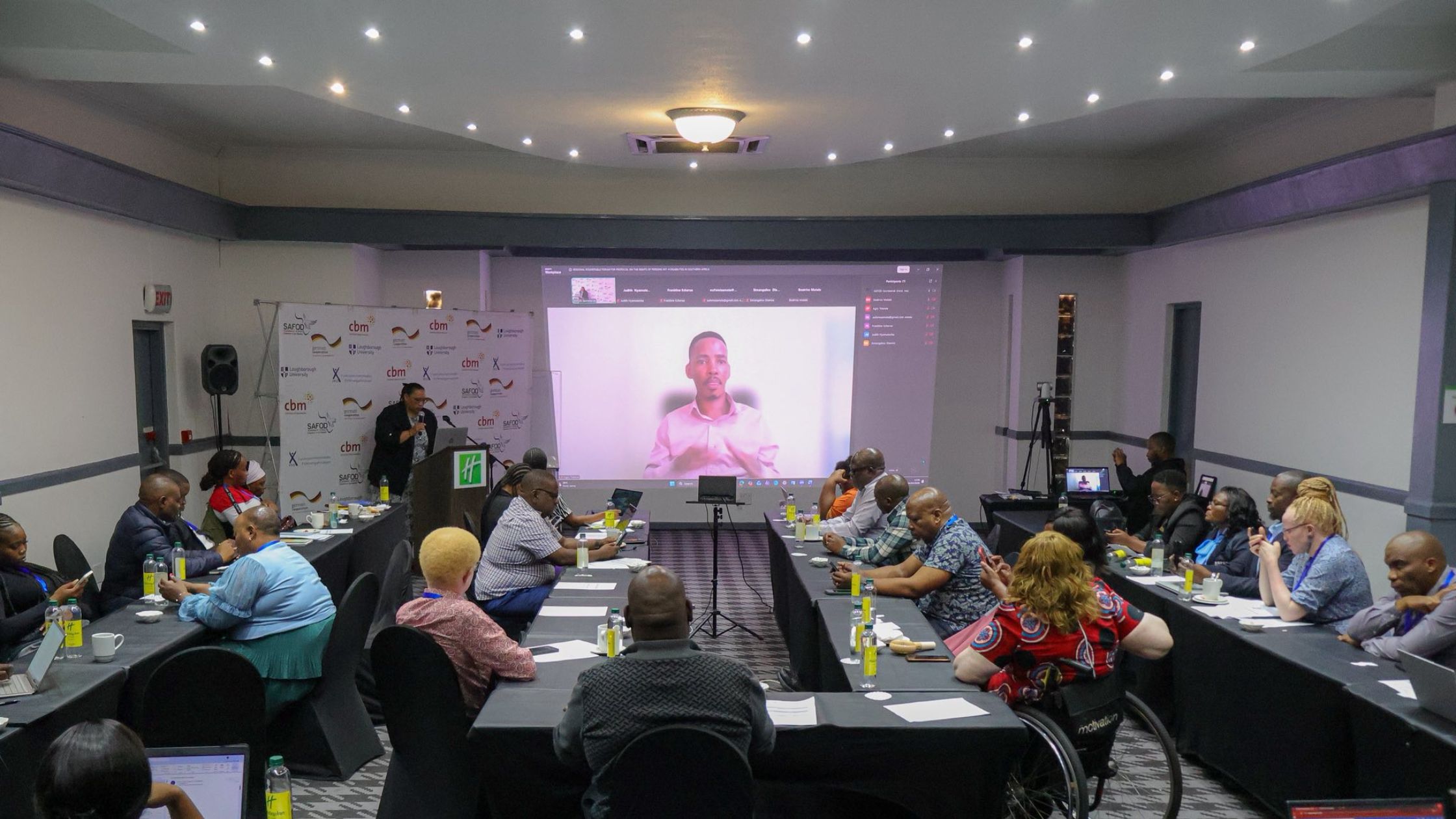
The Johannesburg Forum was a working event. Participants spent three days going through all 44 articles. Four asks came out of it:
- Review and strengthen the draft. Suggest changes, flag gaps and sharpen the language.
- Endorse the Disability Coordination Unit. Press for its quick set-up, and take the message home.
- Carry commitments home. Governments, human rights commissions and civil society should turn forum outcomes into Cabinet papers.
- Widen the consultations. SAFOD will continue in Tanzania, Mozambique, Mauritius and other Member States.
Next steps are clear. SAFOD will finish the forum report and keep talking with Member States. It will then hold a regional consensus conference, submit the draft to the SADC Secretariat and push for adoption at the Summit. Read how parliament can help.
Why the SADC Disability Protocol Matters Now
Ten years of work. Eight countries consulted. A 44-article draft. Governments starting to commit.
The SADC Disability Protocol is closer to reality than ever. The evidence shows the region needs it. The question now is whether Member States will act.
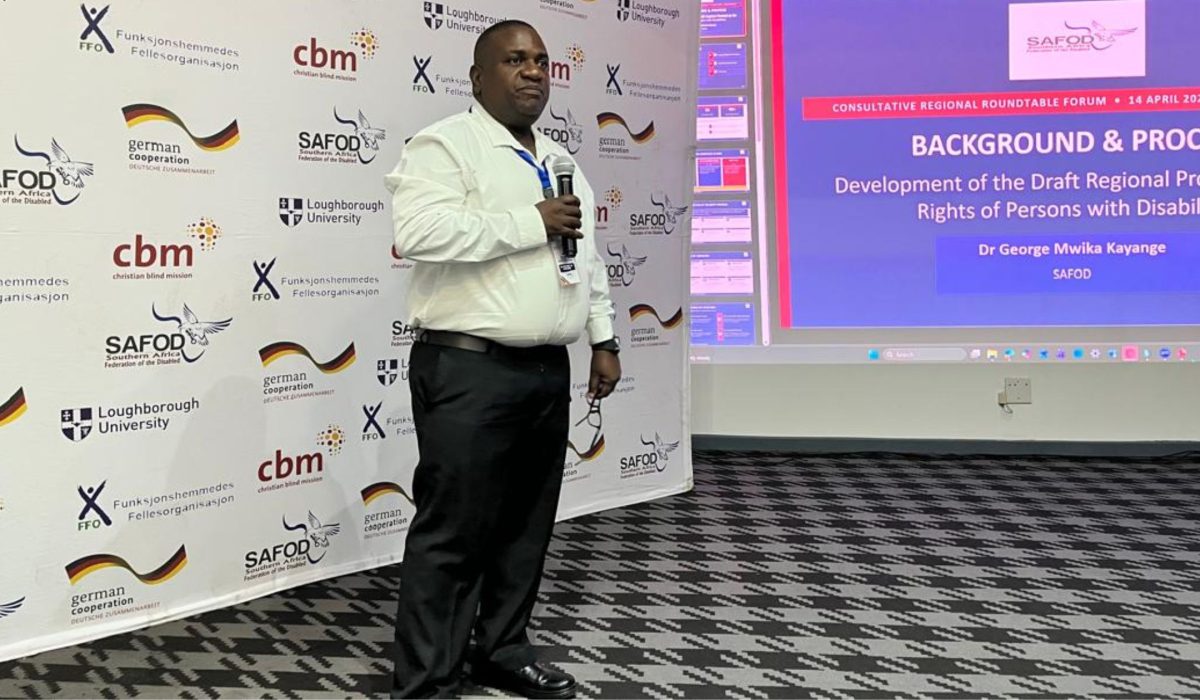
Dr George Mwika Kayange, who is also the founder of the Assistive Technology Innovation Wiki, delivered this presentation at the SAFOD Consultative Regional Roundtable Forum on 14 April 2026 in Johannesburg, South Africa. SAFOD (the Southern Africa Federation of the Disabled) is the leading disability network coordinating national affiliate federations across all 16 SADC Member States.
Learn more at safod.net